


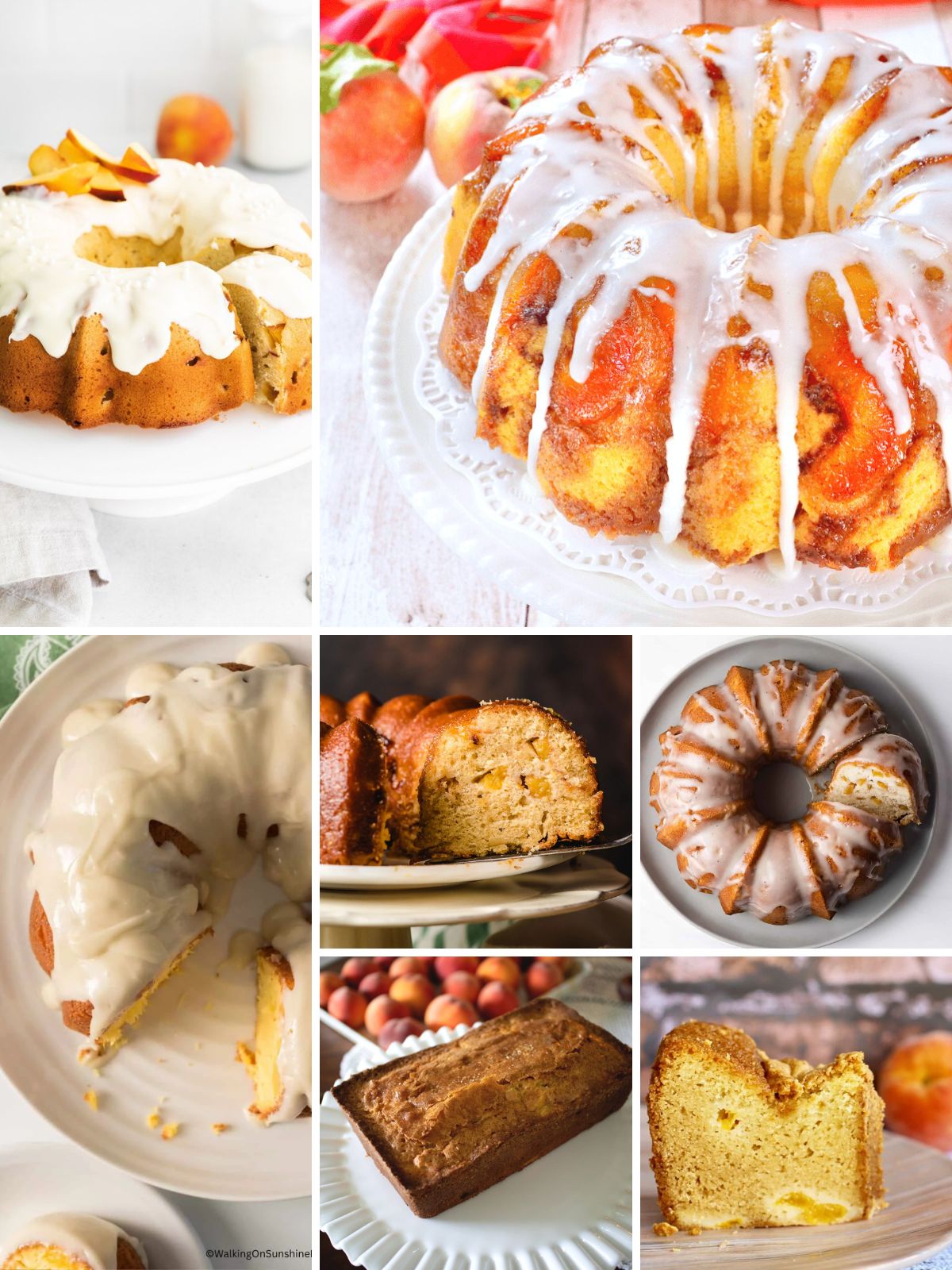
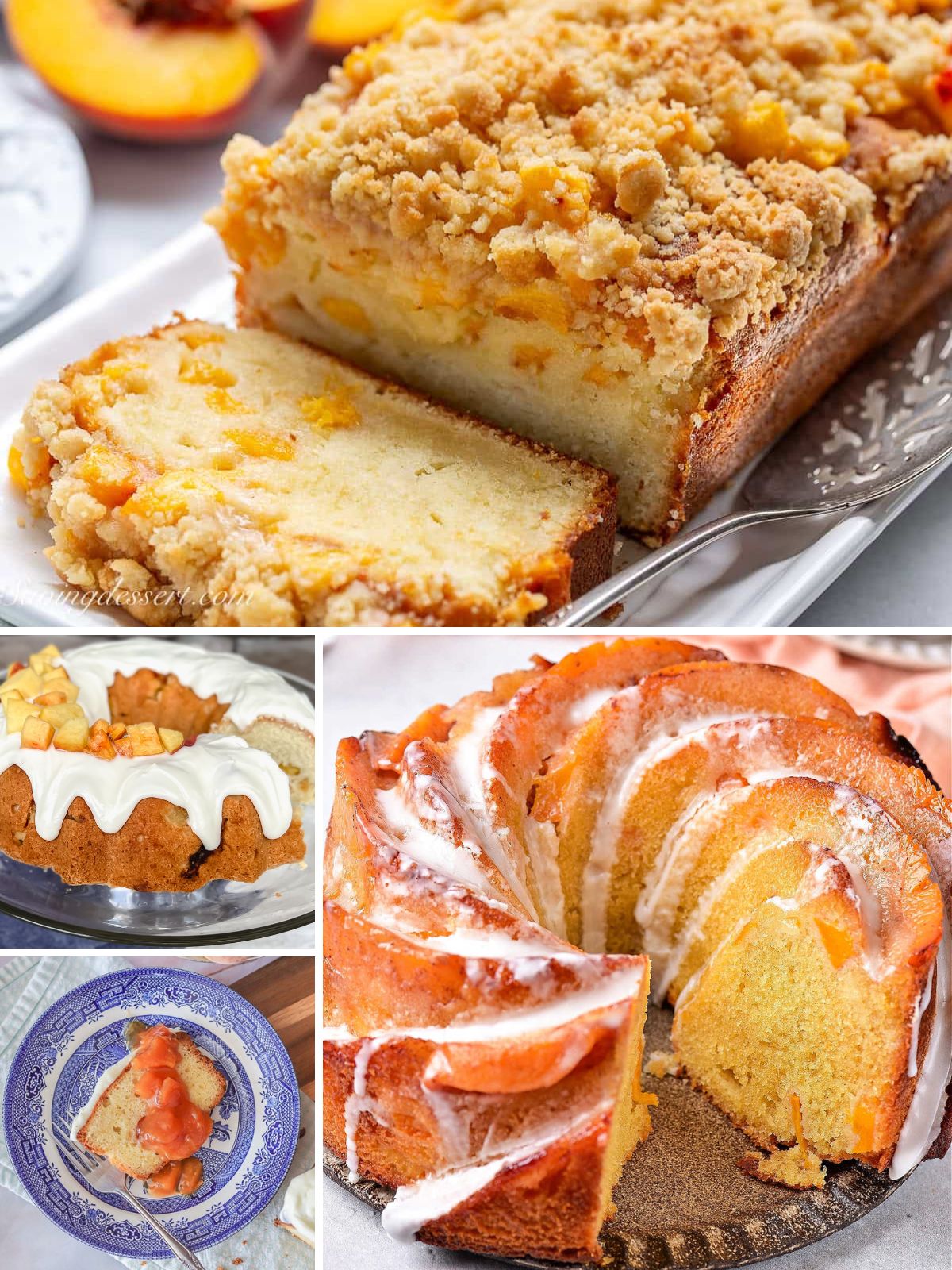
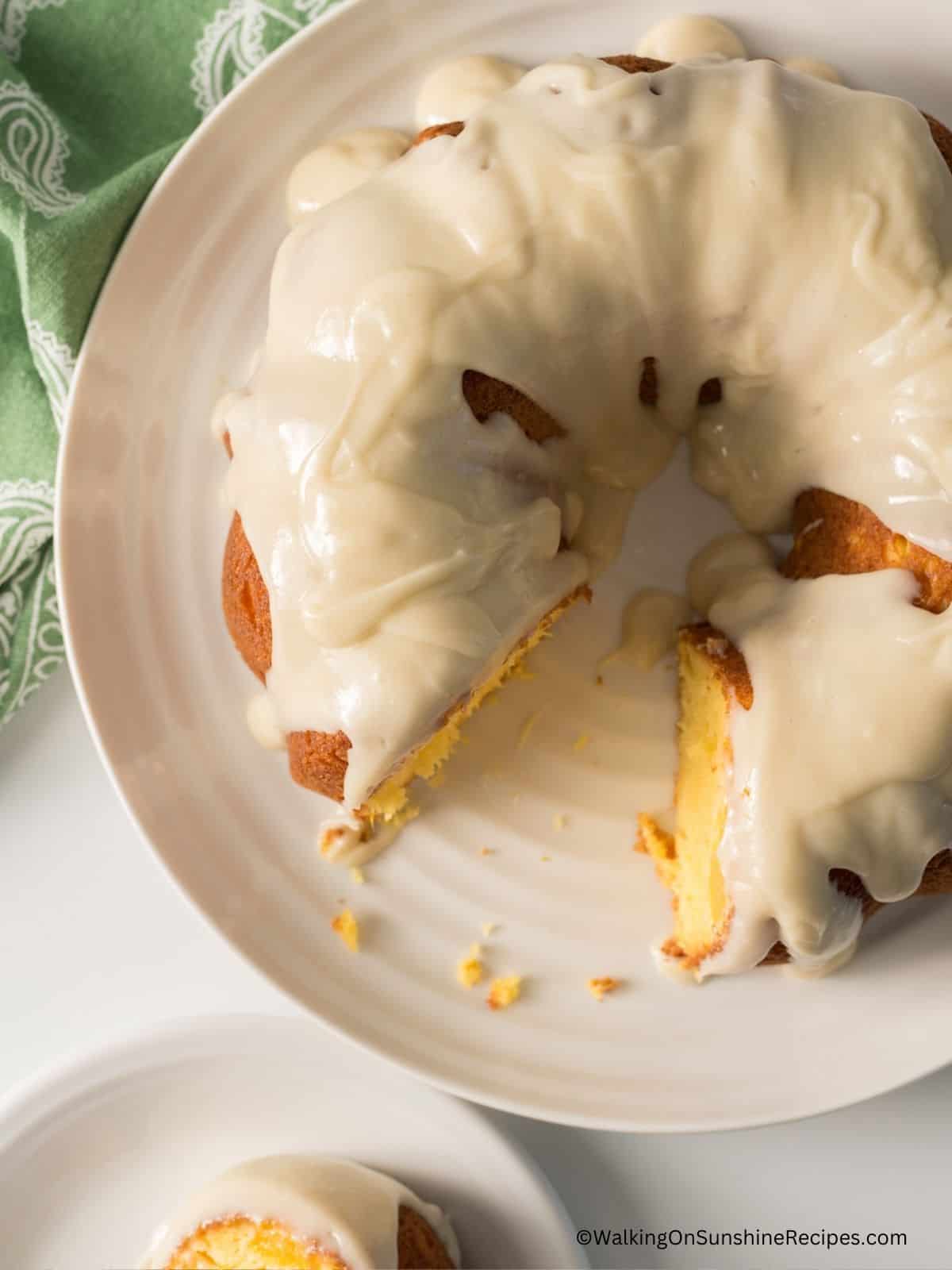
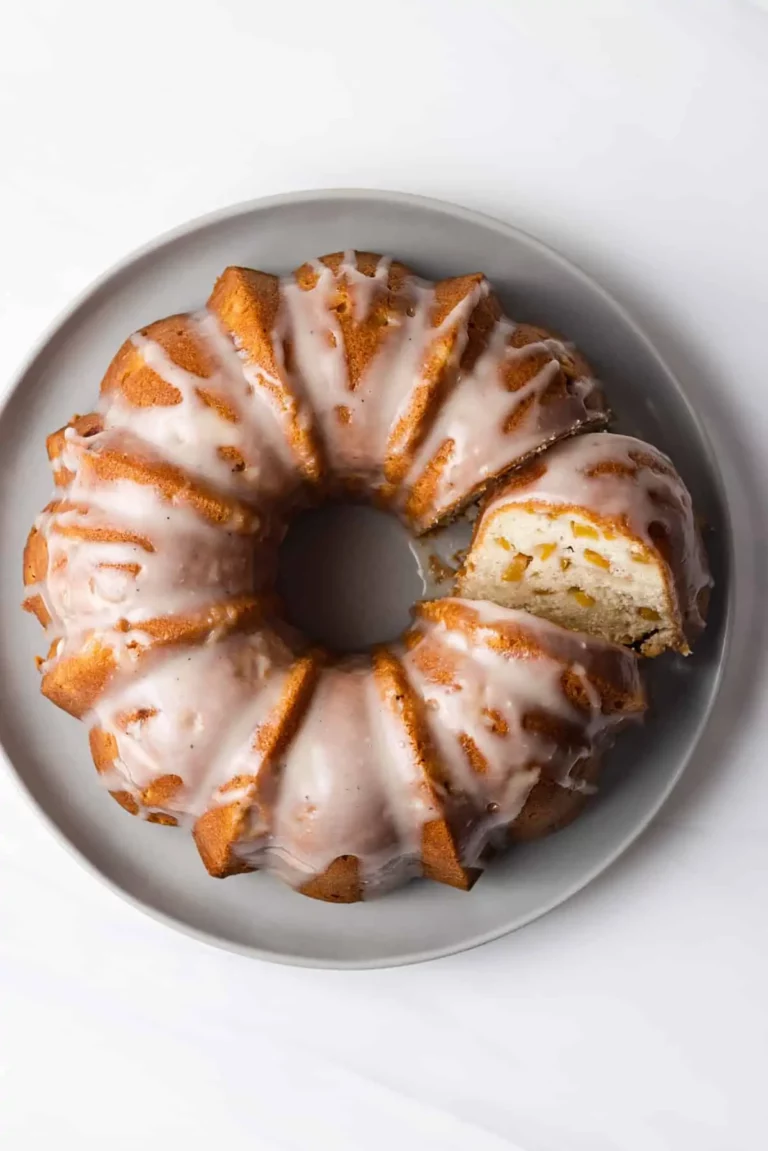
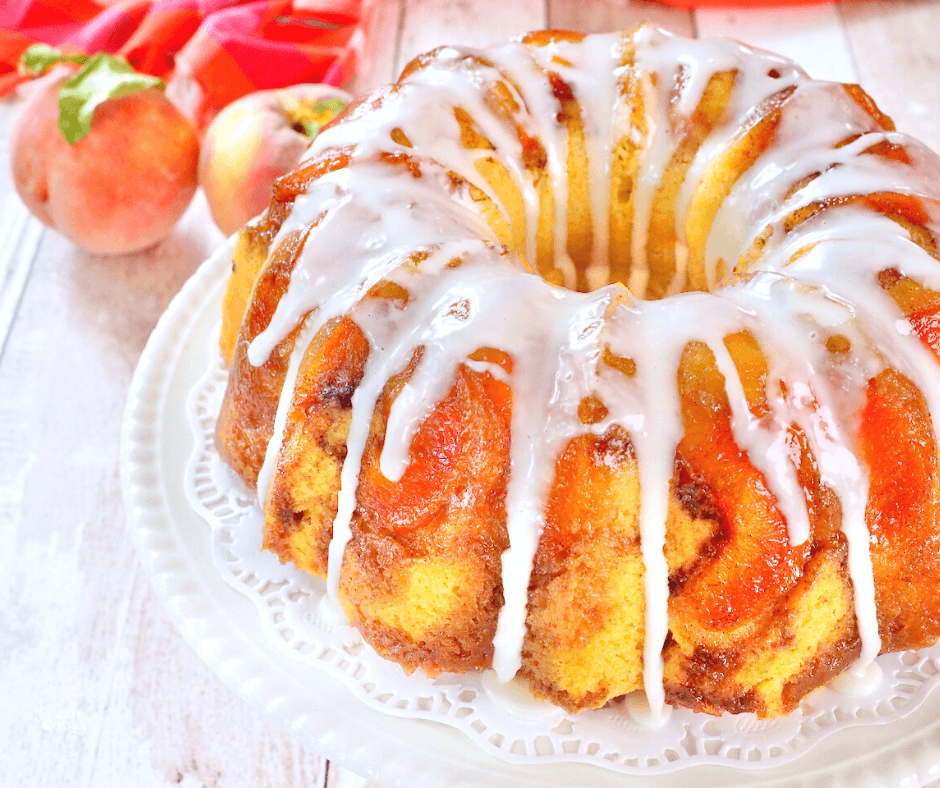
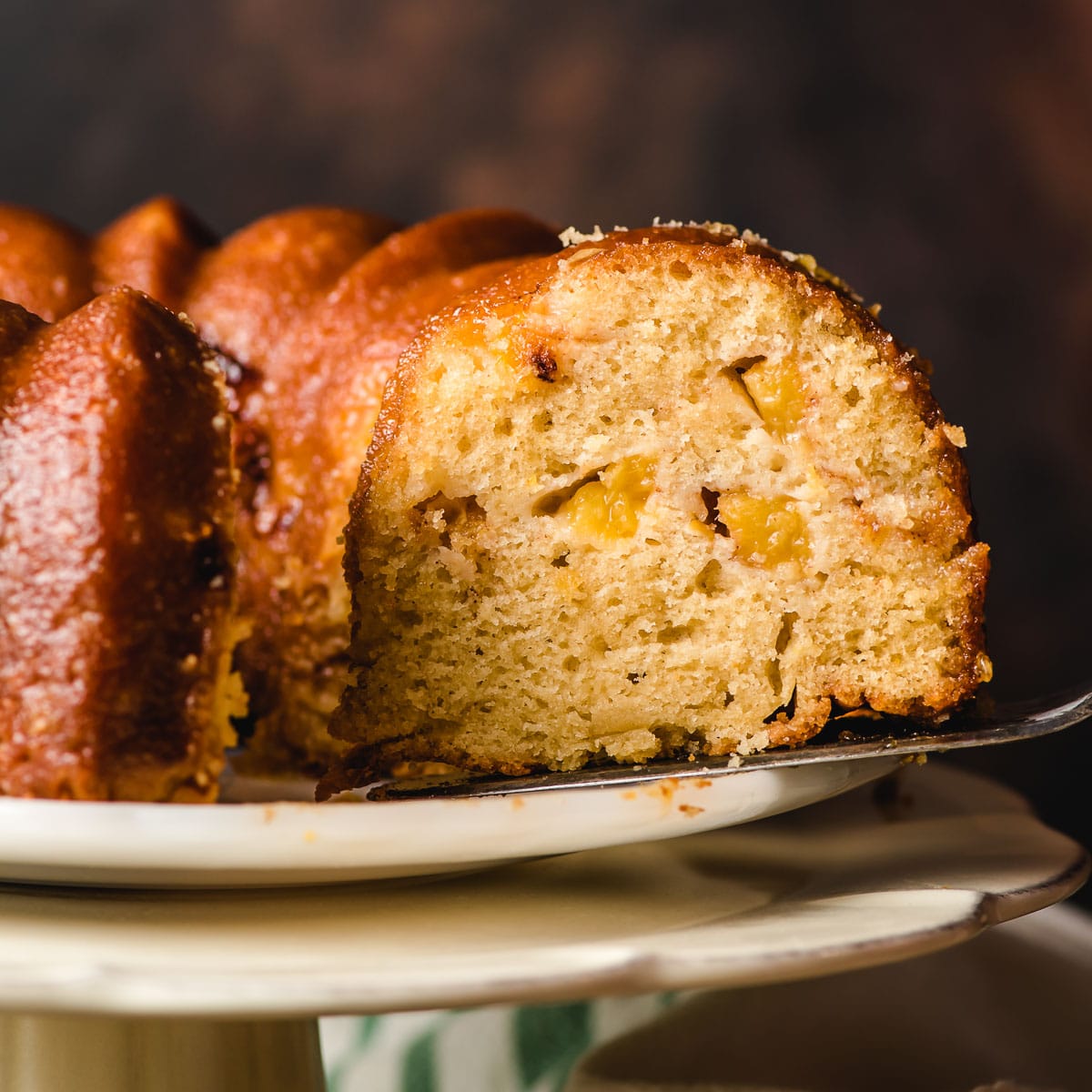
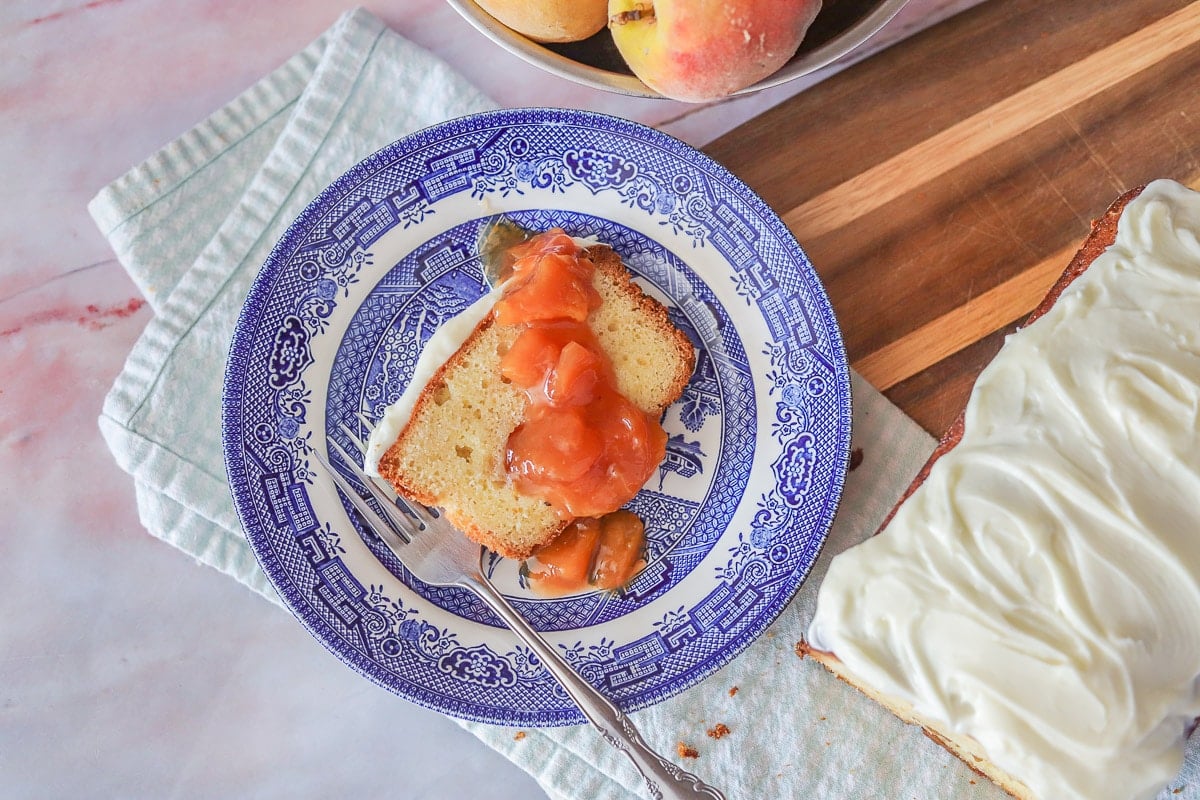
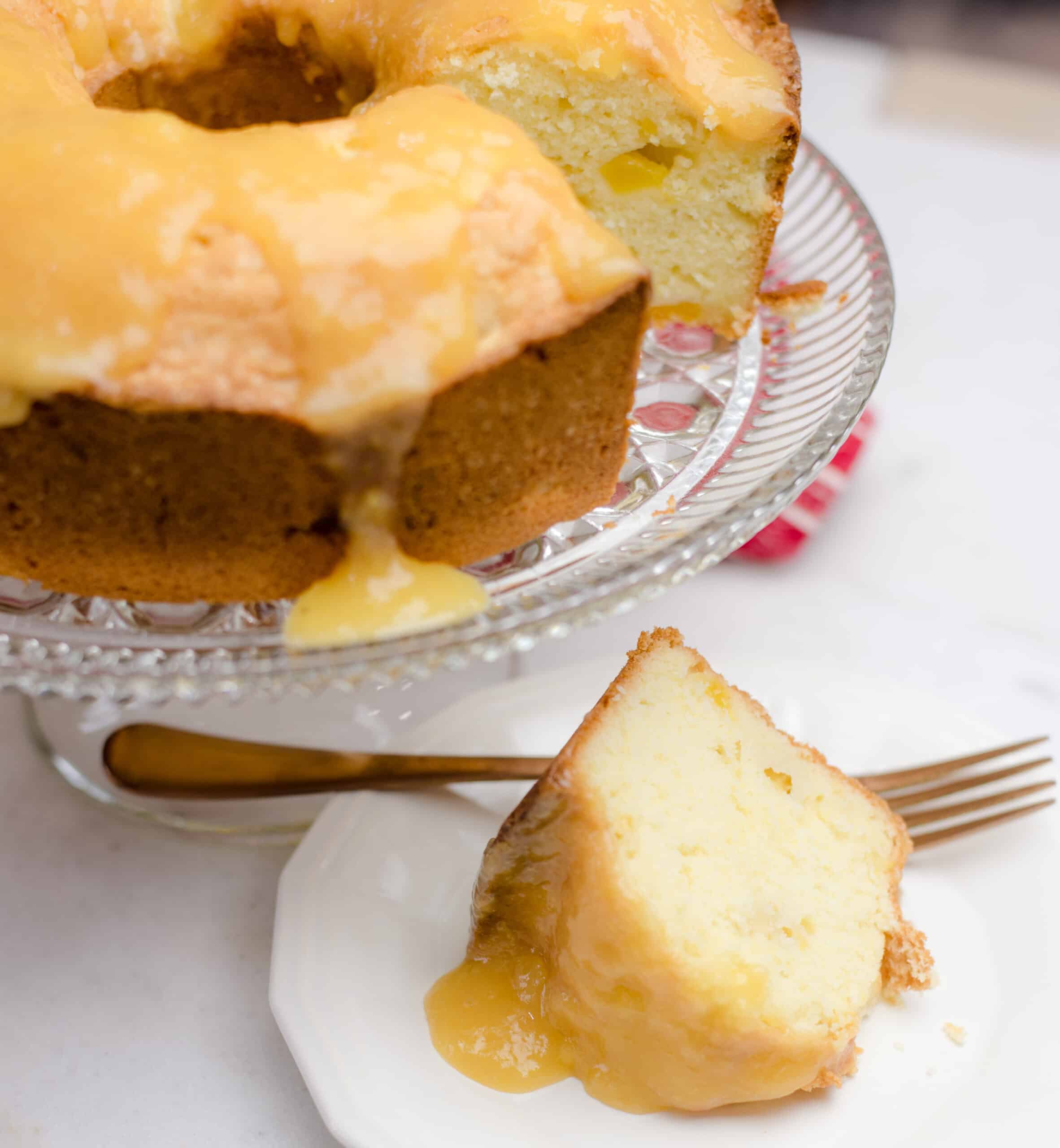
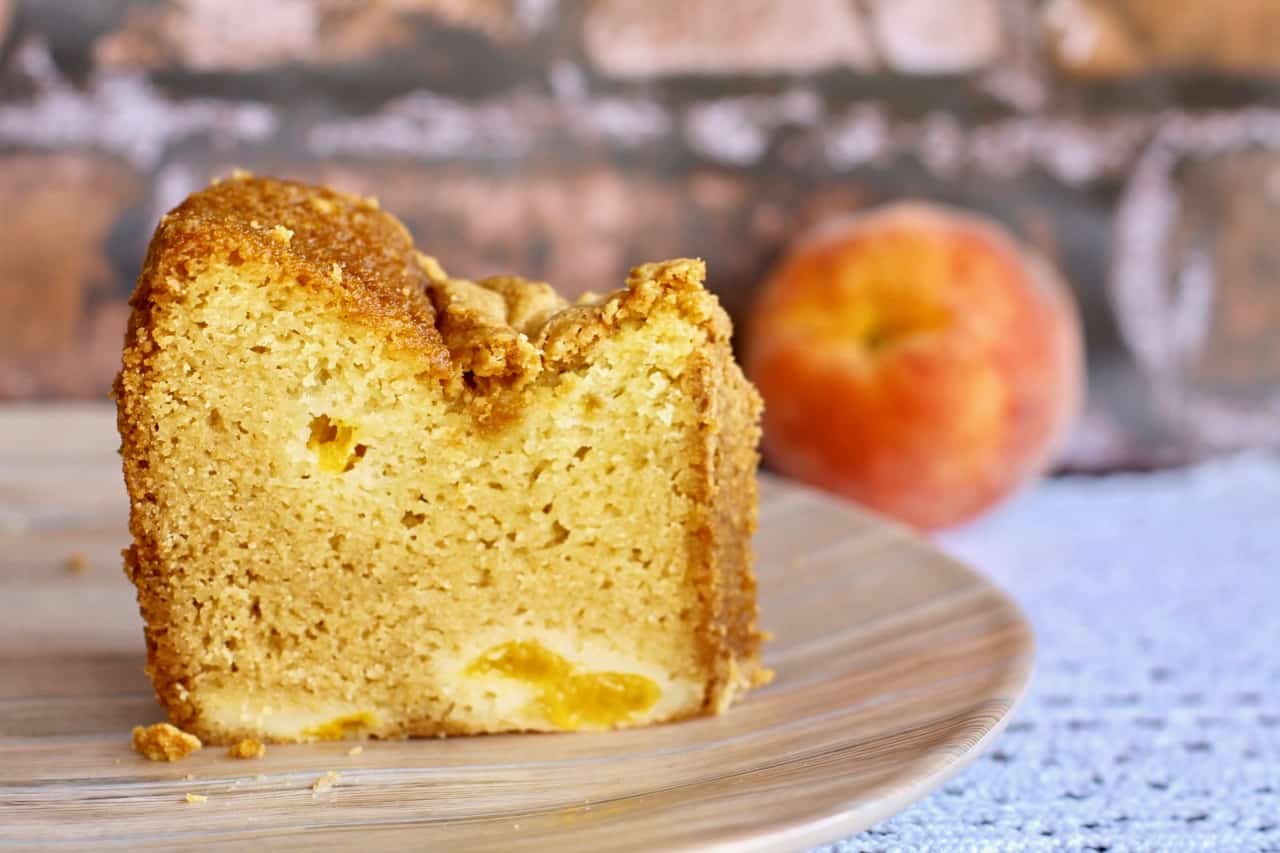
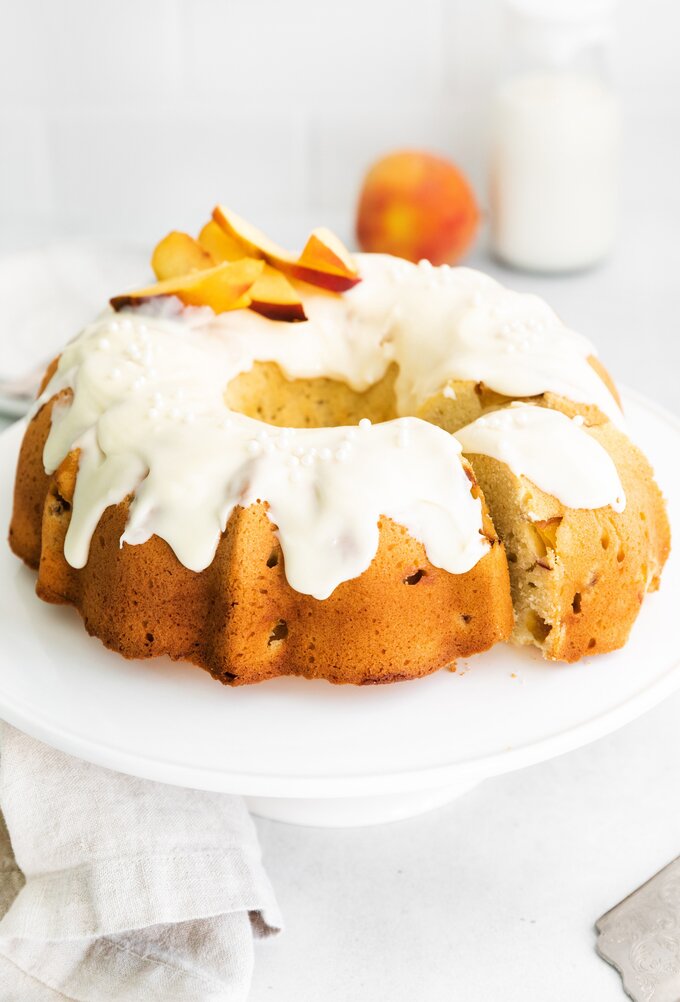
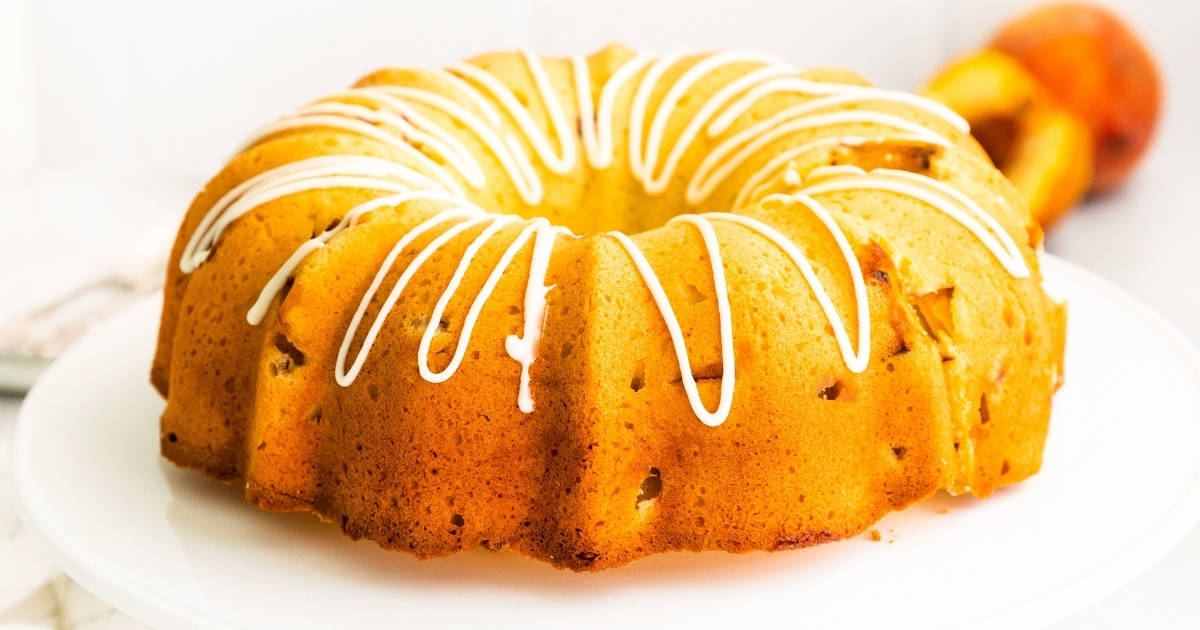
Get ready to indulge in the rich, buttery goodness of Peach Pound Cake Recipes!
Included in this roundup are variations of the classic pound cake flavored with sweet juicy fruit. They're perfect for summer holidays, backyard parties or bridal and baby showers.
Check out all the other Peach Dessert Recipes for even more delicious ideas.
Want to Save This Recipe?
Enter your email & I'll send it to your inbox. Plus, get great new recipes from me every week!
By submitting this form, you consent to receive emails from Walking on Sunshine Recipes.
Baking with fresh or canned peaches adds natural sweetness and a soft, moist texture, making desserts even more delicious.
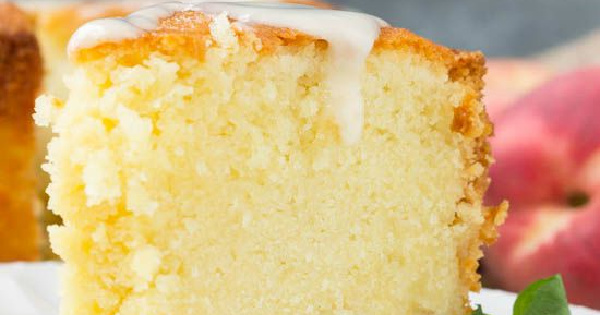
Their juicy flavor pairs perfectly with rich, buttery pound cakes, creating a tender crumb and a hint of fruity freshness in every bite.
Looking for more Easy Dessert Recipes? Try my Fried Peach Pies or my Peach Cake made with a Cake Mix.
Why you'll LOVE these Recipes:
Perfect Blend of Sweet and Rich: Peaches bring natural sweetness and balance to buttery pound cake.
Easy to Make: Straightforward recipes that are beginner-friendly and require common ingredients.
Great for Any Occasion: Ideal for family desserts, celebrations, or gifting.
Seasonal and Versatile: Perfect for using fresh summer peaches or canned peaches year-round.
Customizable Options: Includes recipes with glazes, toppings, or mix-ins to suit your taste.
Why is a pound cake called a pound cake?
A pound cake is called a pound cake because traditional recipes used one pound each of four main ingredients: flour, sugar, butter, and eggs.
This simple ratio made it easy to remember and ensured a rich, dense texture. Over time, variations have been created, but the name "pound cake" remains a nod to its original proportions.
Helpful Kitchen Tools
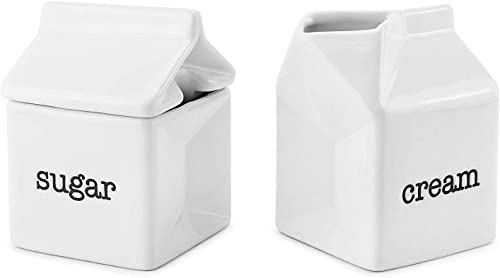
Nordic Ware Pro Cast Original Bundt Pan, 12 Cup, Grey Darware Sugar and Creamer Set, Milk Carton Shaped White Ceramic Cream Jug and Sugar BowlPeach Fruit Melamine Plates6 Ceramic Coffee Mug Set with Lids, 18 Ounce Large Tall Colored Coffee Mugs with Lid



Recipe FAQ's
To view the answers, simply click on the down arrow (⬇) next to each question. If you have any other questions not answered here, please leave a comment!
To keep a pound cake moist, avoid overbaking and include ingredients like sour cream, yogurt, or buttermilk for added moisture. Once cooled, store it tightly wrapped or in an airtight container to retain its freshness.
Pound cake often cracks on top because the batter is dense, and the outer layer cooks faster than the center. As the center expands and rises during baking, it pushes through the top, creating the characteristic crack.

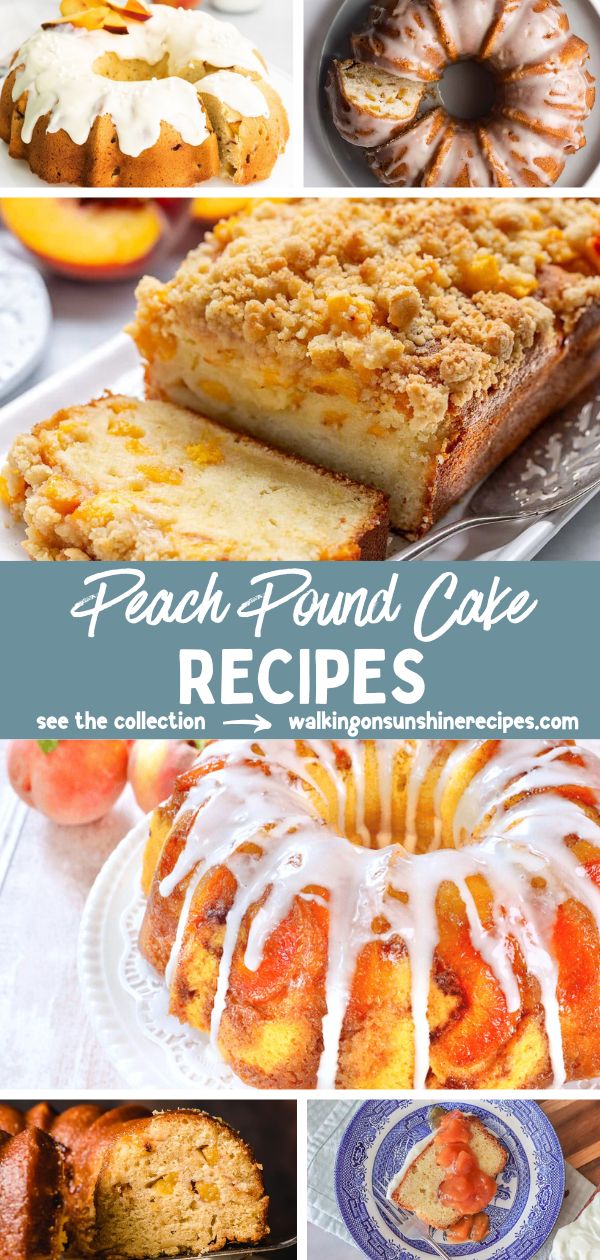
LOVE these recipes? SAVE them for Later!
❤️Tap the heart icon in the lower right corner to add them to your recipe box.
Made any of them? A quick star rating or short review is always appreciated.
Want to save them on paper? The Ultimate Meal Planner & Recipe Binder helps you keep recipes organized in one easy place.






Food Safety Tips:
- Bake goods to their recommended internal temperature, typically 165°F (74°C) or higher for safety.
- Use separate utensils and surfaces for raw ingredients, especially eggs, to prevent cross-contamination.
- Wash your hands thoroughly after handling raw dough or eggs.
- Avoid leaving baked goods or raw dough at room temperature for extended periods.
- Never leave the oven unattended while baking.
- Choose oils with a high smoking point to minimize the release of harmful compounds.
- Ensure good ventilation when using a gas stove when using an oven or gas stove to maintain a safe cooking environment.


Comments
No Comments